Path of Creative Chaos
CONCEPT DEVELOPMENT, VISUAL SYSTEM & PHILOSOPHICAL FRAMEWORK
THE BRIEF
Assigned Anchor: The Hebrew letter כ (Kaf).
Concept Selected:כאוס (Chaos).
Deliverable: Conceptual Diagram / Visual System.
Constraint: Trace a singular Hebrew letter into an expansive philosophical and visual narrative.
Rather than treating chaos as disorder or dysfunction, the concept reclaims it as the ancient, primordial void, the fertile state holding all unformed potential before creation takes shape.
THE CONCEPT & FRAMEWORK
Mapping the Creative Psyche through the Sefirot.
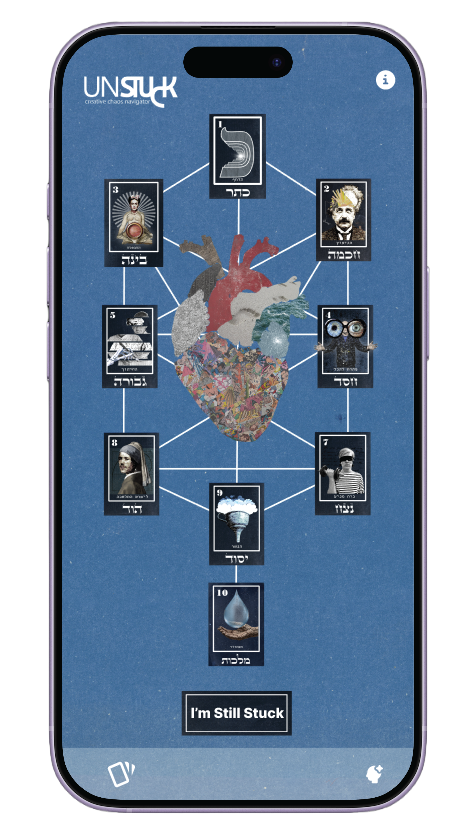
Every creator encounters the void: the blank canvas, the lost momentum, and the stage where nothing seems to move. By bridging the letter כ through כאוס (Chaos) and the Kabbalistic concept of כתר (Keter—the crown/primordial will), the project maps the emotional and cognitive anatomy of the creative process across the Tree of Life (Sefirot):
Keter & Chokhmah (The Spark): The primordial will and lightning-flash intuition before concept takes shape.
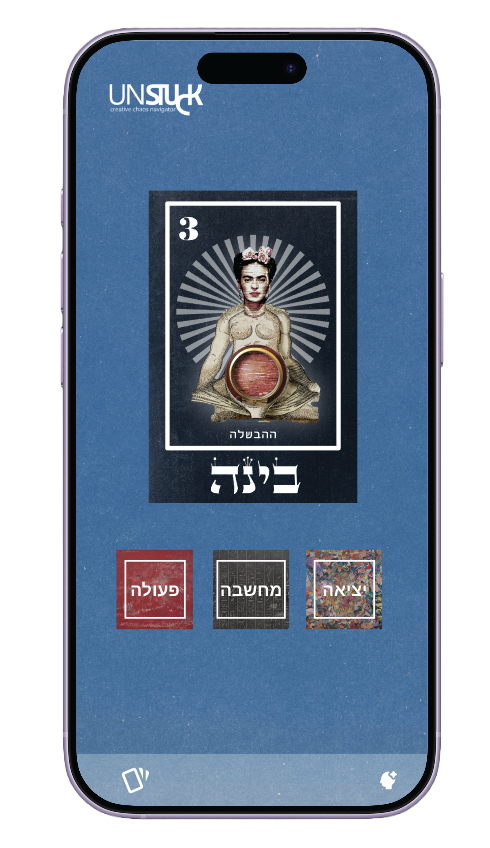
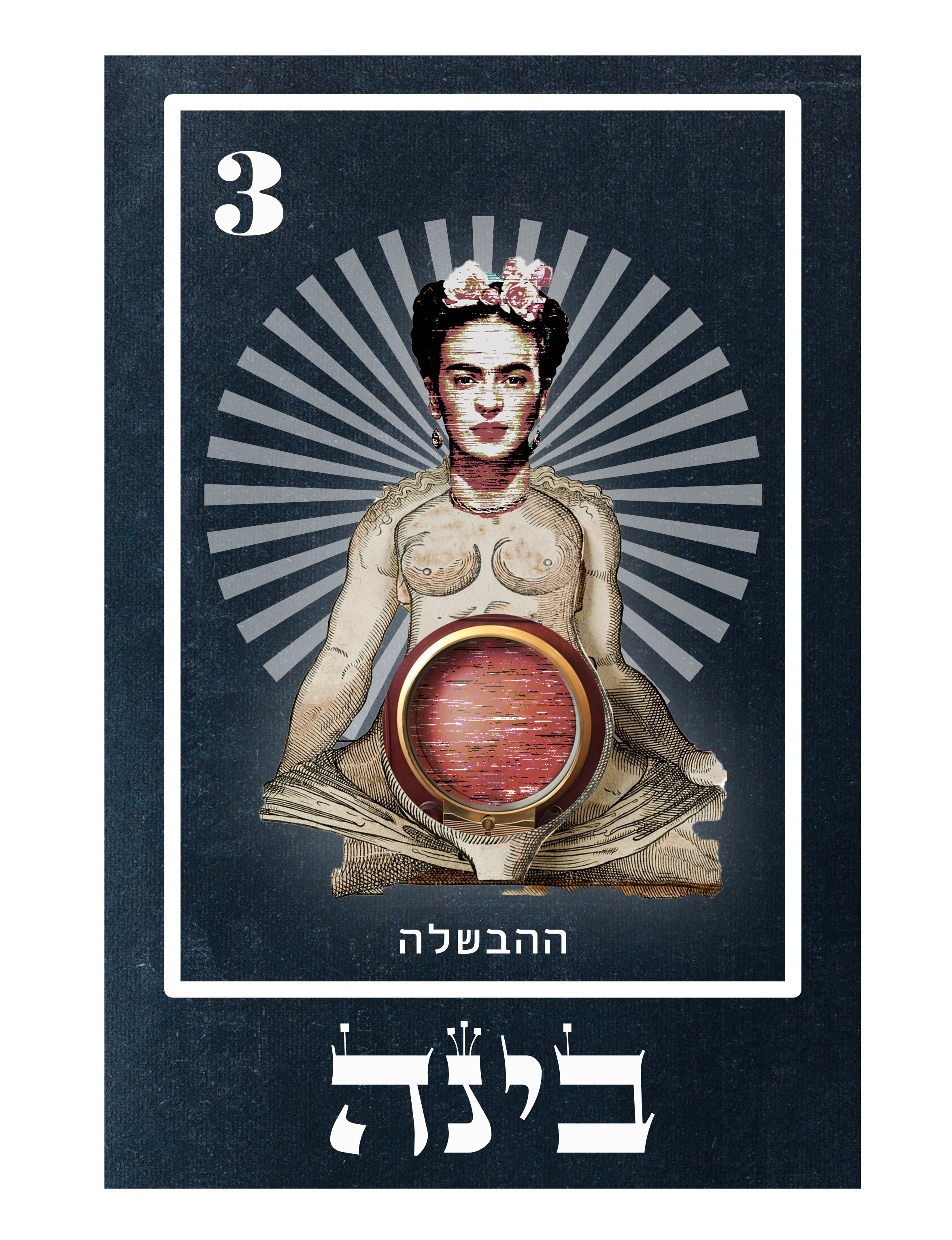
Binah (The Gestation): The intellectual womb where raw abstraction is nurtured and given depth.
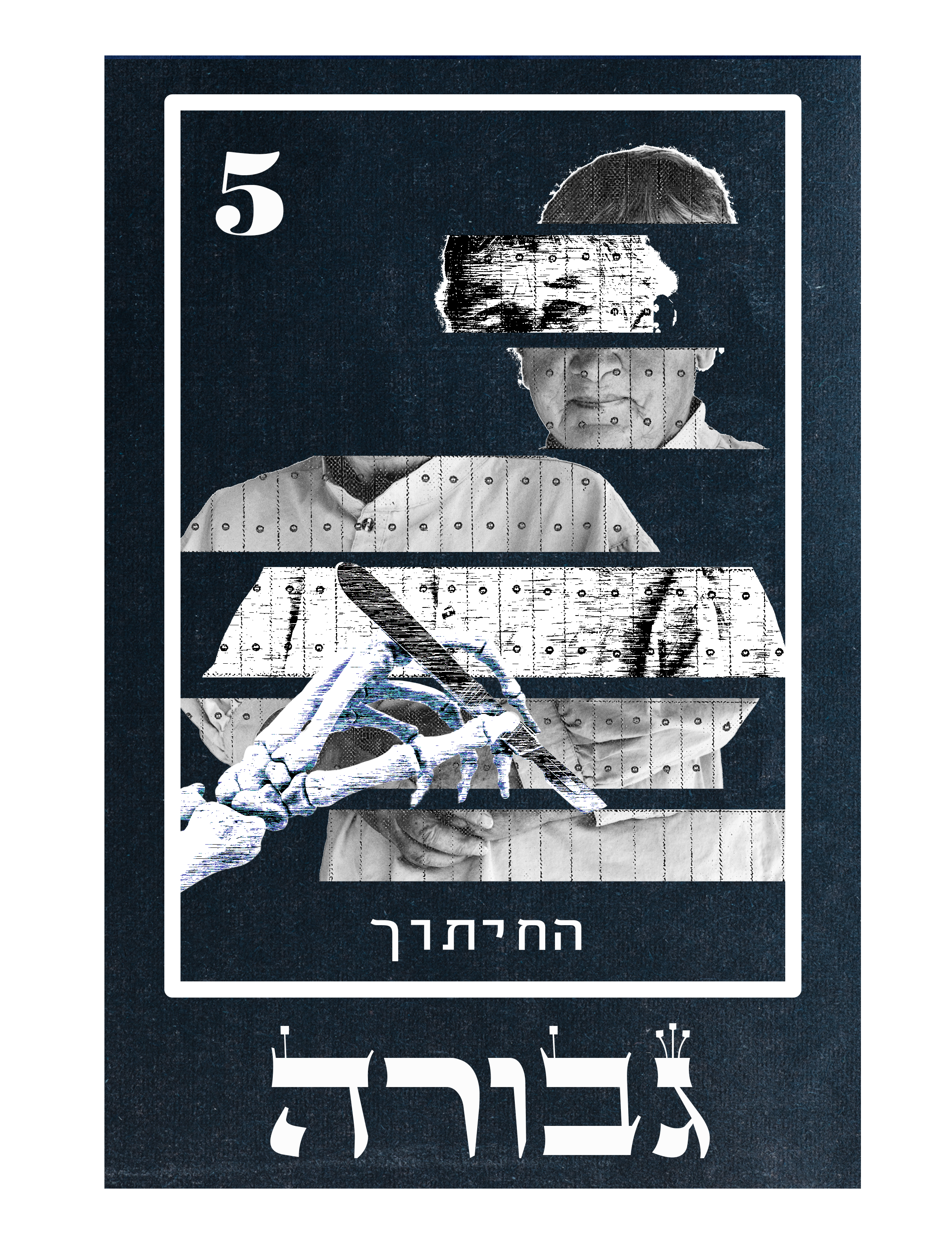
Chesed & Gevurah (Expansion vs. Restraint): The wild, boundless flow of idea generation (Chesed) balanced by the strict editorial discipline of pruning and cutting away (Gevurah).
Tiferet (The Harmonizing Heart): The central core synthesizing passion and restraint into balanced creative beauty.
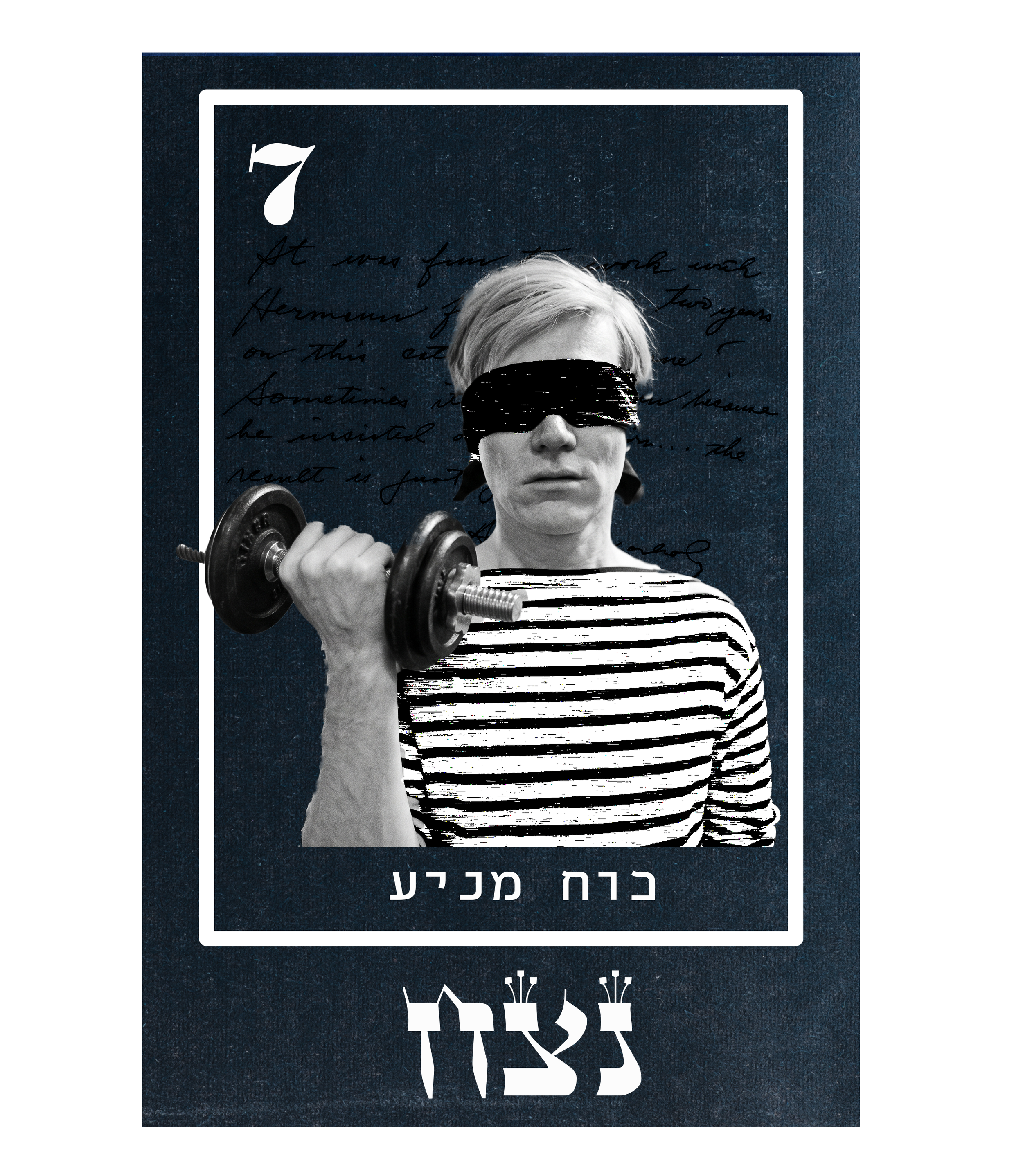
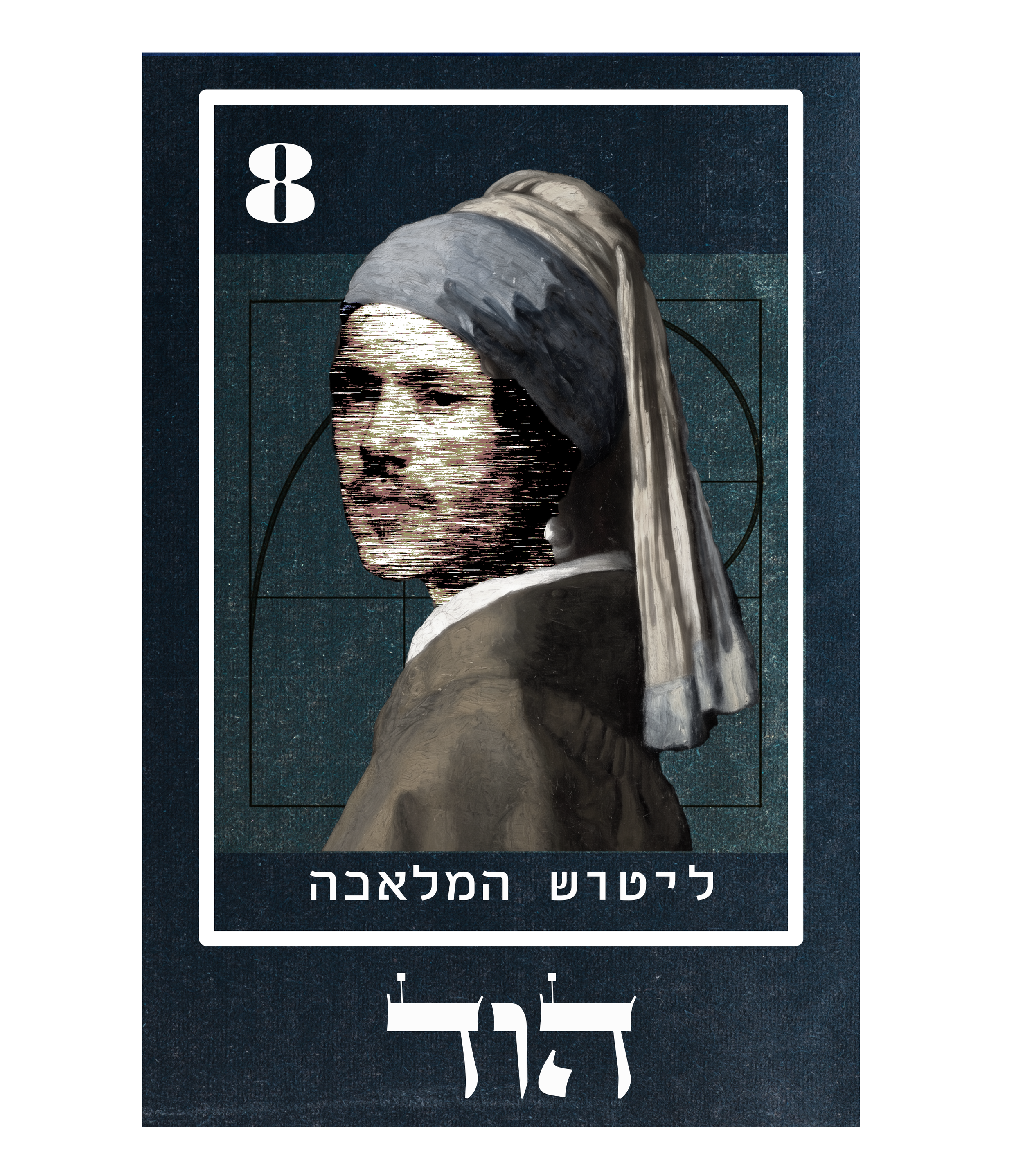
Netzach & Hod (Endurance & Surrender): The drive to push through resistance (Netzach) paired with the humility to adapt and surrender to what the work demands (Hod).
Yesod (The Foundation): The channel uniting all disparate elements into a cohesive, functional blueprint.
Malkhut (The Manifestation): The final vessel of physical realization where ethereal concepts anchor into tangible reality.
VISUAL DIRECTION & SYSTEM
Dadaist & Surrealist Collage: Merging anatomical studies, celestial diagrams, and cultural archetypes (Einstein, Kahlo) to ground abstract mysticism in the human creative struggle.
Blueprint Geometry: Fine celestial grids and radial lines provide structural tension against the organic, layered collage elements.
Editorial Typography: Clear Hebrew typography that balances contemplative micro-copy with stark display titling.
SPECS & DELIVERABLES
Core Disciplines: Concept Ideation, Visual Metaphor, Editorial Typography, Digital Collage
Tools Used: Adobe Photoshop, Adobe Illustrator, Adobe InDesign
Format: Exhibition Print / Editorial Spread System

Mood Board
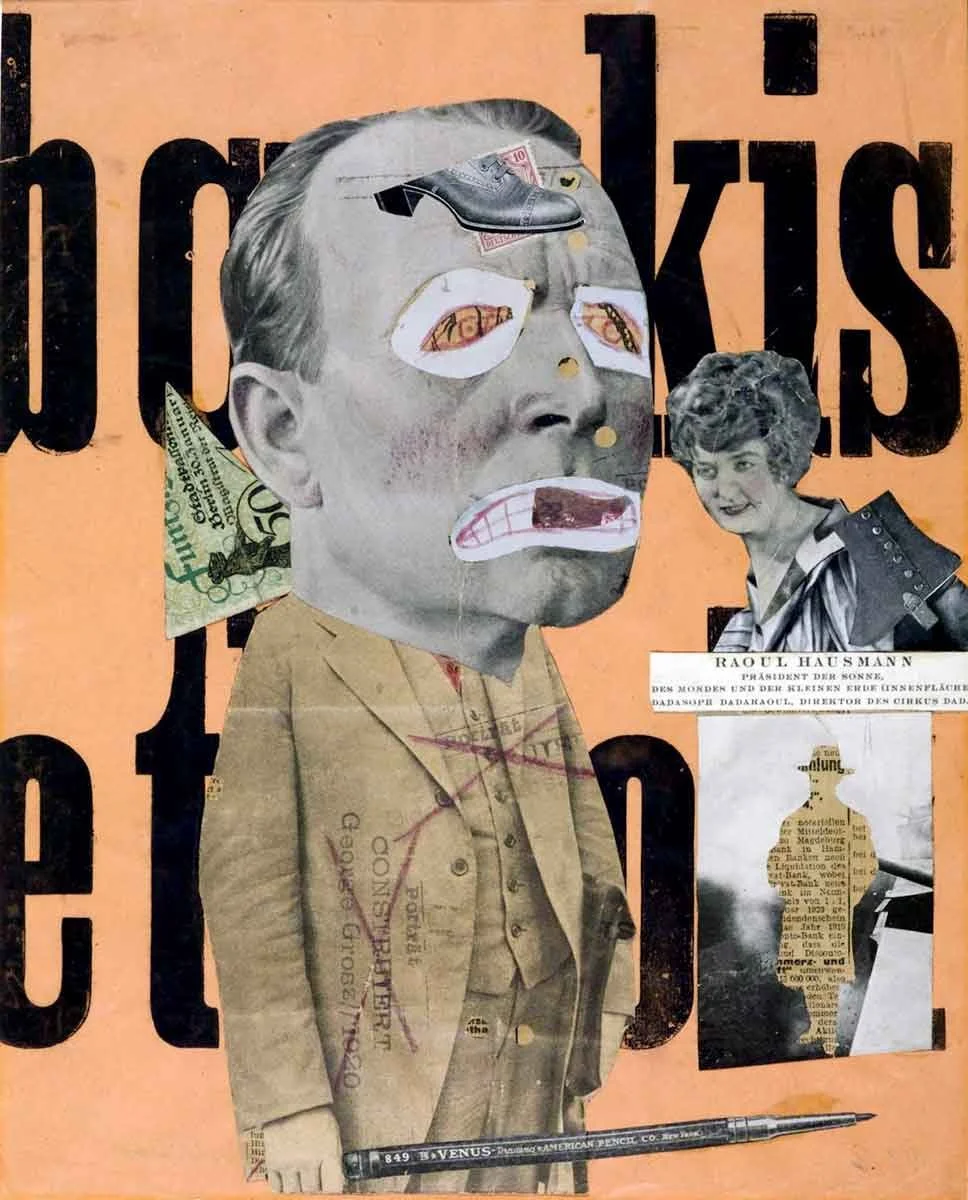
Dada collage art
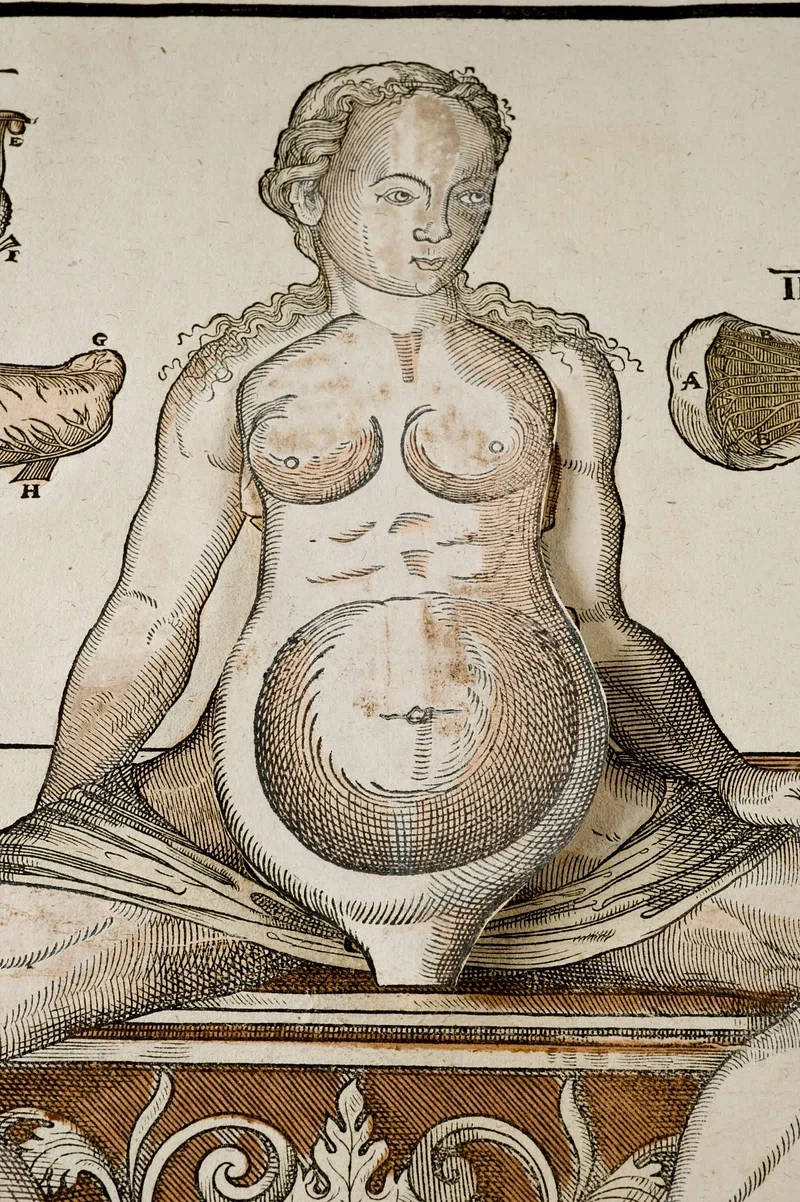
Antique anitomical drawings
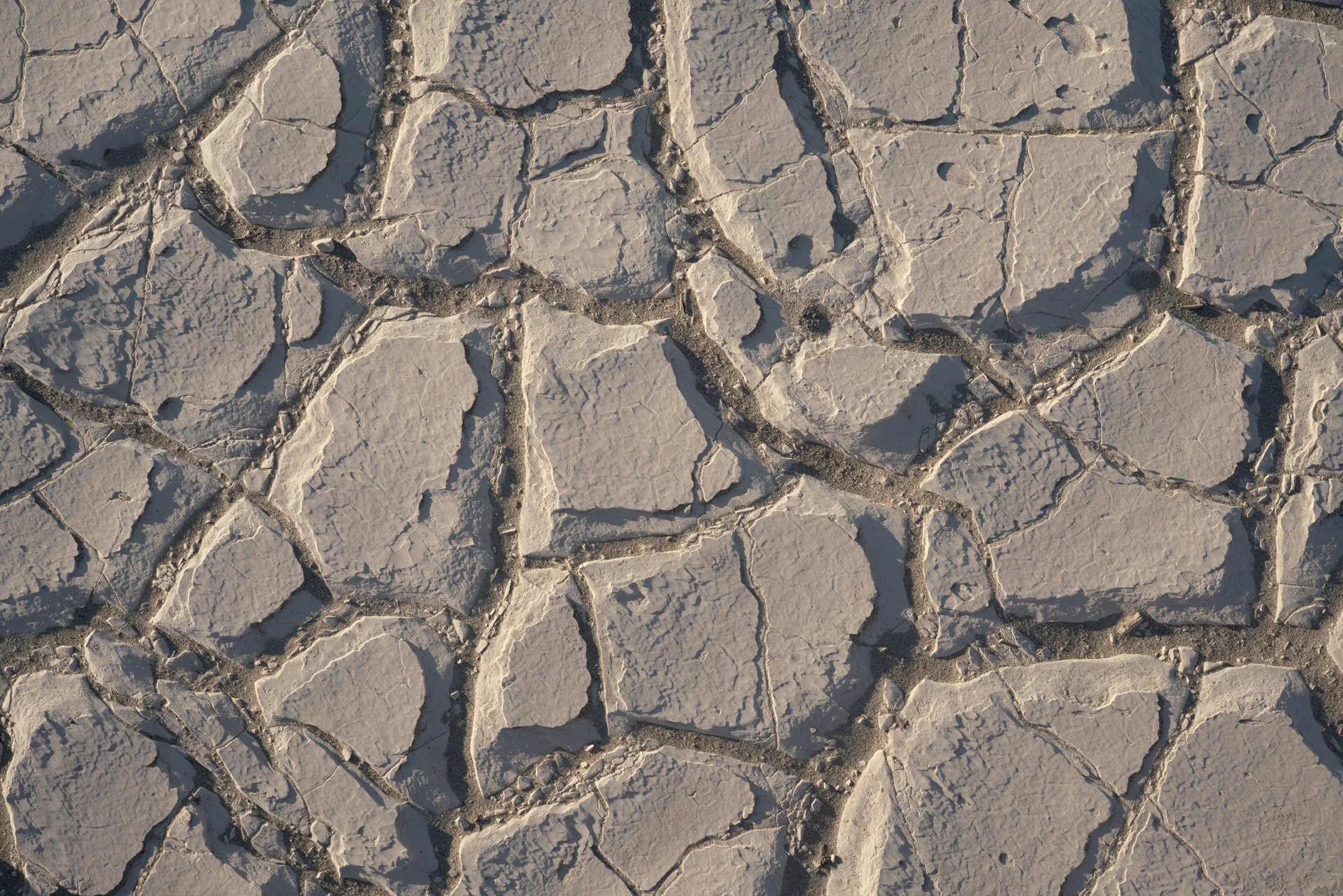
Blueprint texture

Kabbalistic map of the Sefirot
Artists that Inspired
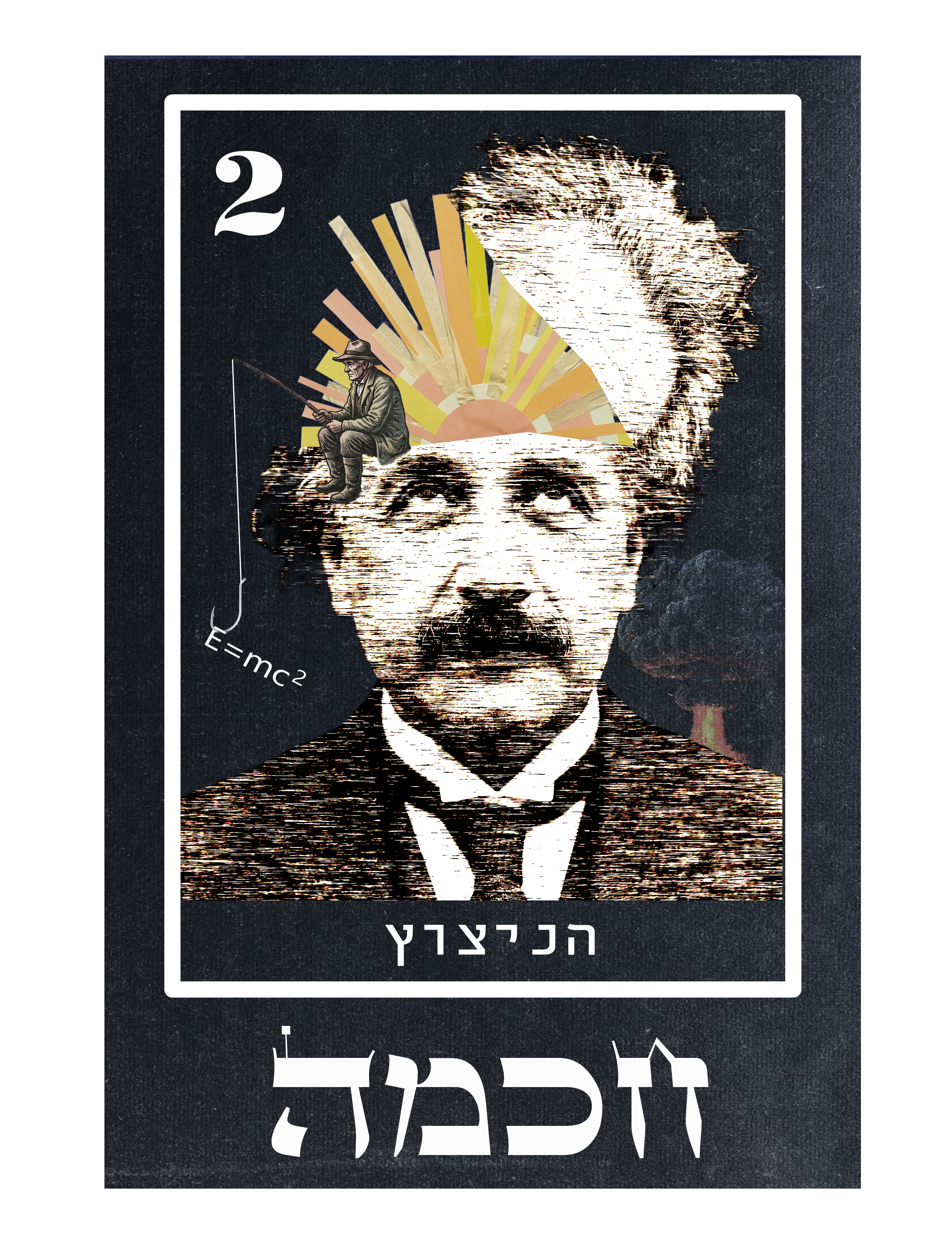
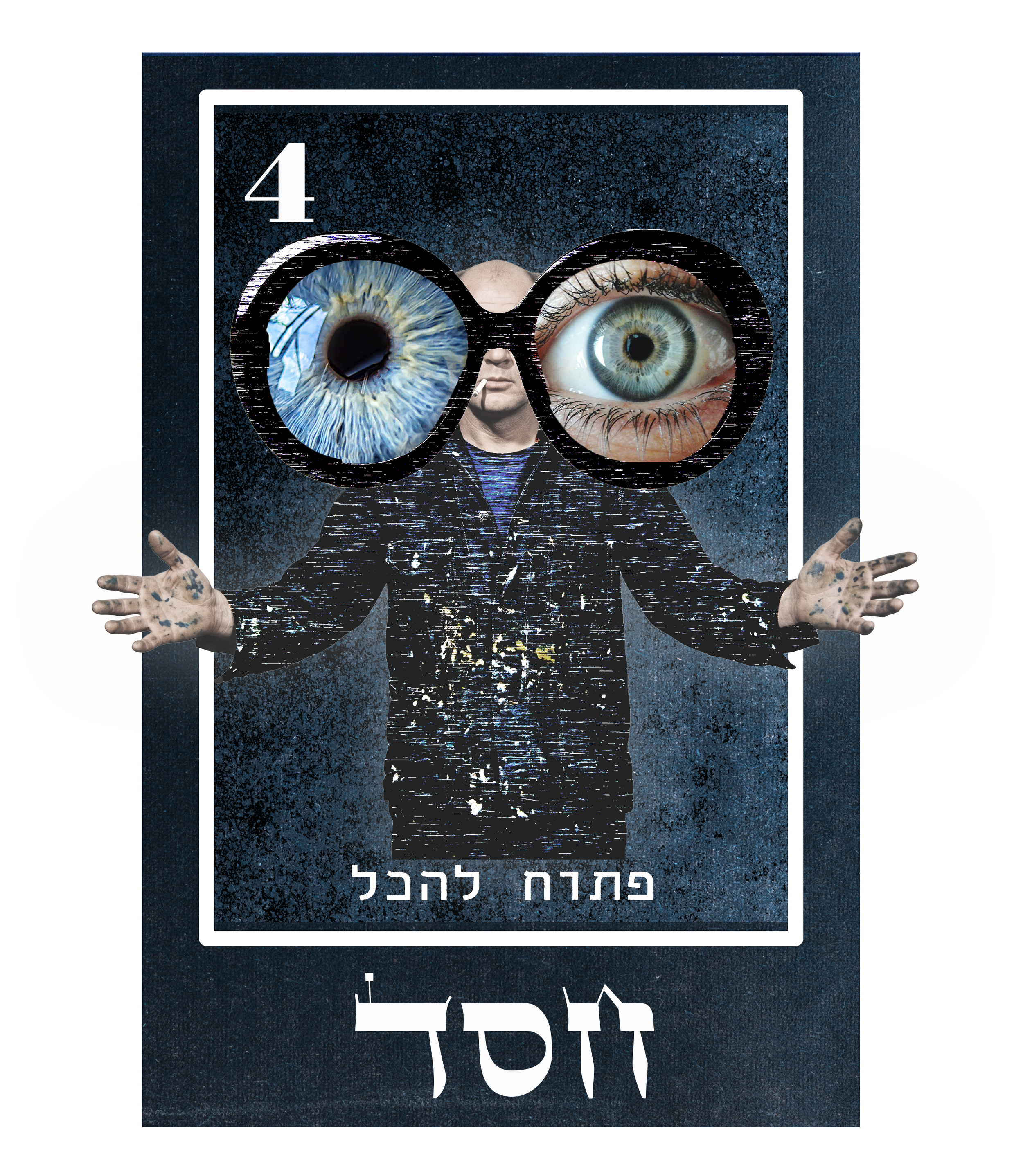
Albert Einstein is one of the most universally recognized symbols of human wisdom and creative genius. What is less often remembered is that Einstein was not purely a mathematician; he was profoundly creative, famously arriving at his greatest insights through imagination and thought experiments rather than calculation alone. He once said that imagination is more important than knowledge. His theory of relativity did not emerge from data alone but from a young man imagining himself riding alongside a beam of light. Einstein understood that the deepest insights arrive as a flash, whole, wordless, and irreversible. The fisherman sitting on his head is fishing for exactly that moment. The mushroom cloud in the corner is the consequence; the flash contains everything, including what it will become.
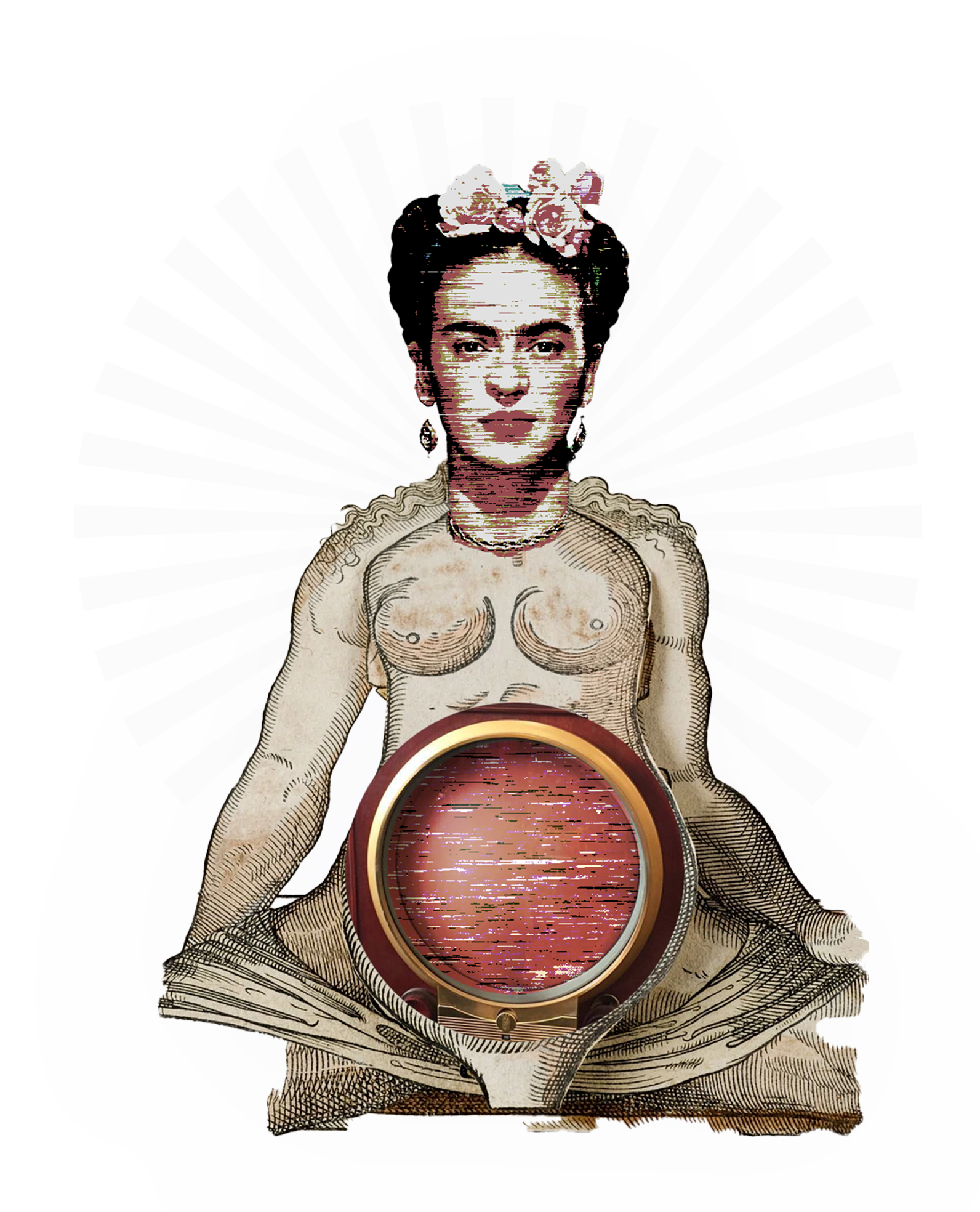
Frida Kahlo spent years confined to her bed following a devastating accident, immobilized but never creatively still. That experience of being held inside a body that wouldn't move, of living intensely in an interior world, of transforming pain and constraint into art- this is the Binah experience made literal. Frida is the Great Mother of this poster, radiating outward while holding the luminous, turbulent thing gestating within her. She knew better than anyone that the deepest creative work happens in the dark, in stillness, in the place that looks from the outside like nothing.
Jackson Pollock embodied this stage completely. His work was absolutely free and unbound, no strict grid, no borders, no hesitation. He poured paint directly onto the canvas laid on the floor, moving around it, inside it, the act of making inseparable from the work itself. Pollock's process was pure Chesed: total release, nothing held back.
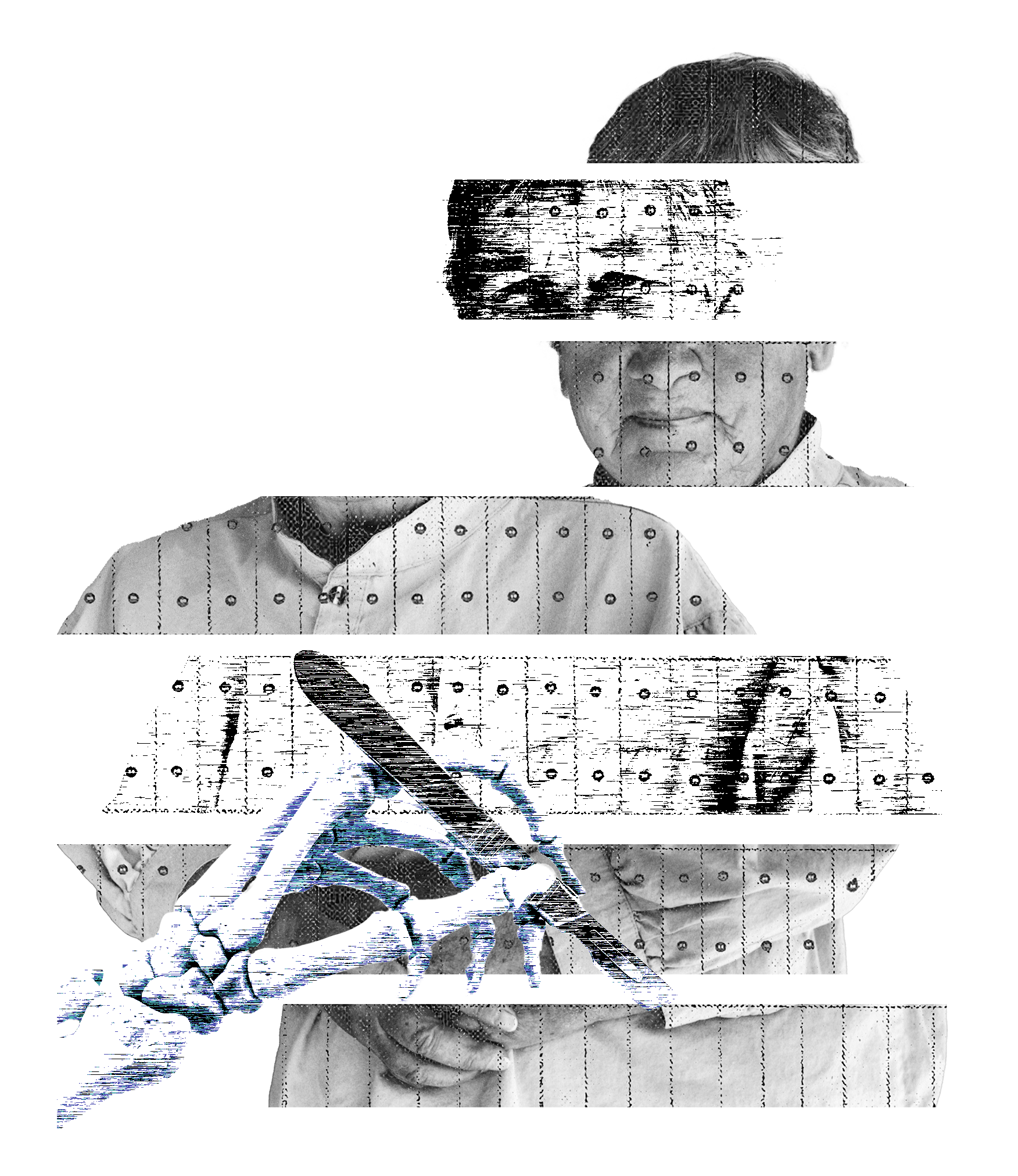
Agnes Martin spent her life enacting this principle. A radical minimalist, she edited her work down to its essential core, a few simple lines and patterns repeated with quiet precision, everything unnecessary removed. She walked away from New York at the height of her fame, disappearing into the New Mexico desert to strip her life and work down to what truly mattered. Agnes Martin is the skeleton hand holding the blade.
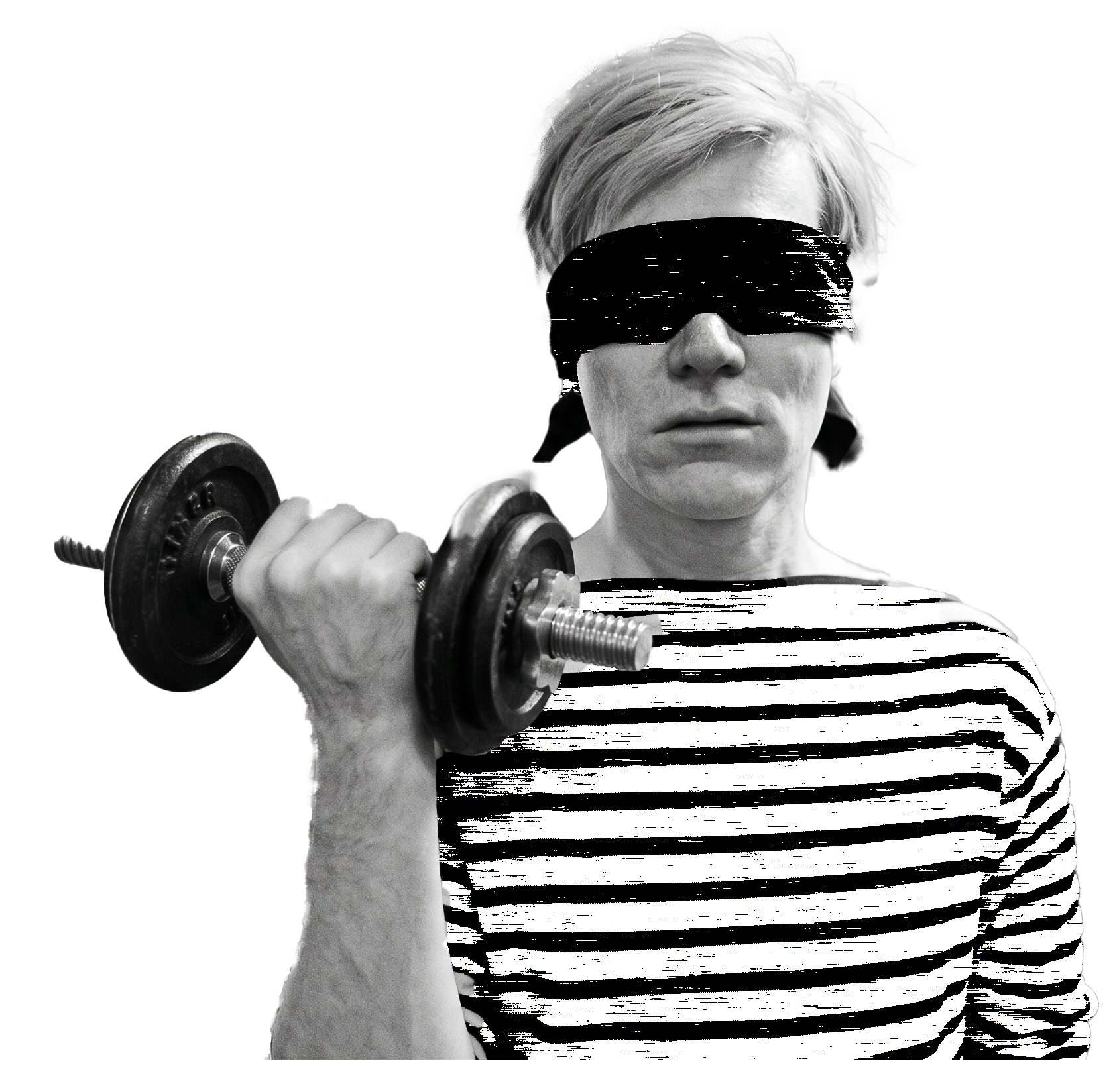
Andy Warhol was the embodiment of relentless creative drive. Prolific beyond measure, he produced work continuously: paintings, prints, films, photographs, magazines. The Factory ran at full speed because Warhol never stopped. He understood that creativity is also an act of will, of showing up and producing regardless of inspiration. He kept moving. Always.
Johannes Vermeer was the opposite of Warhol in every way. In his entire lifetime, he produced only 34 known paintings. Each one a world unto itself: extraordinary light, surface, texture, skin. He spent hours perfecting each work, building up layers of glazed paint to achieve effects that have never been fully explained. Vermeer gave everything to the craft. The work is the proof.
Fonts

Textures
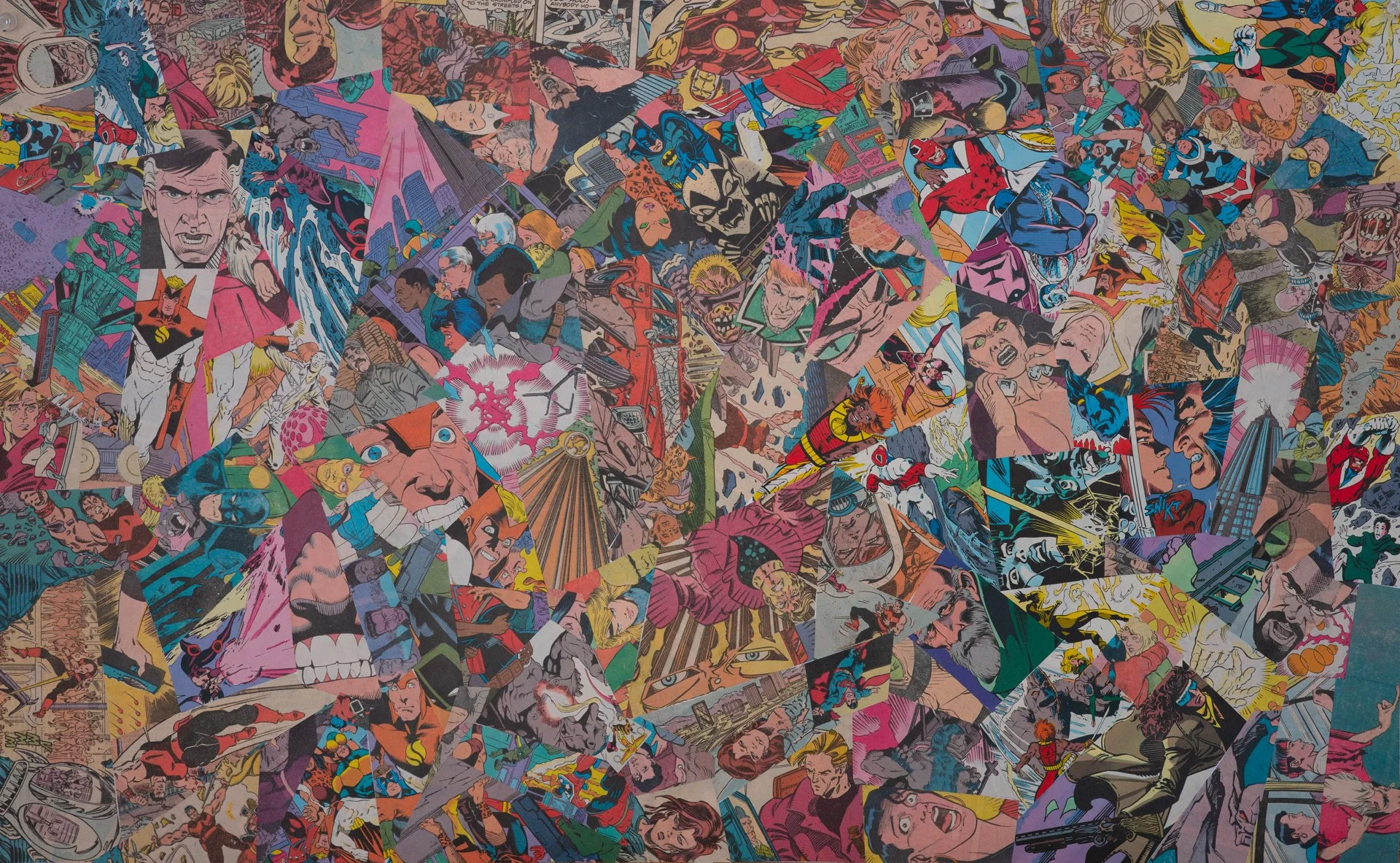

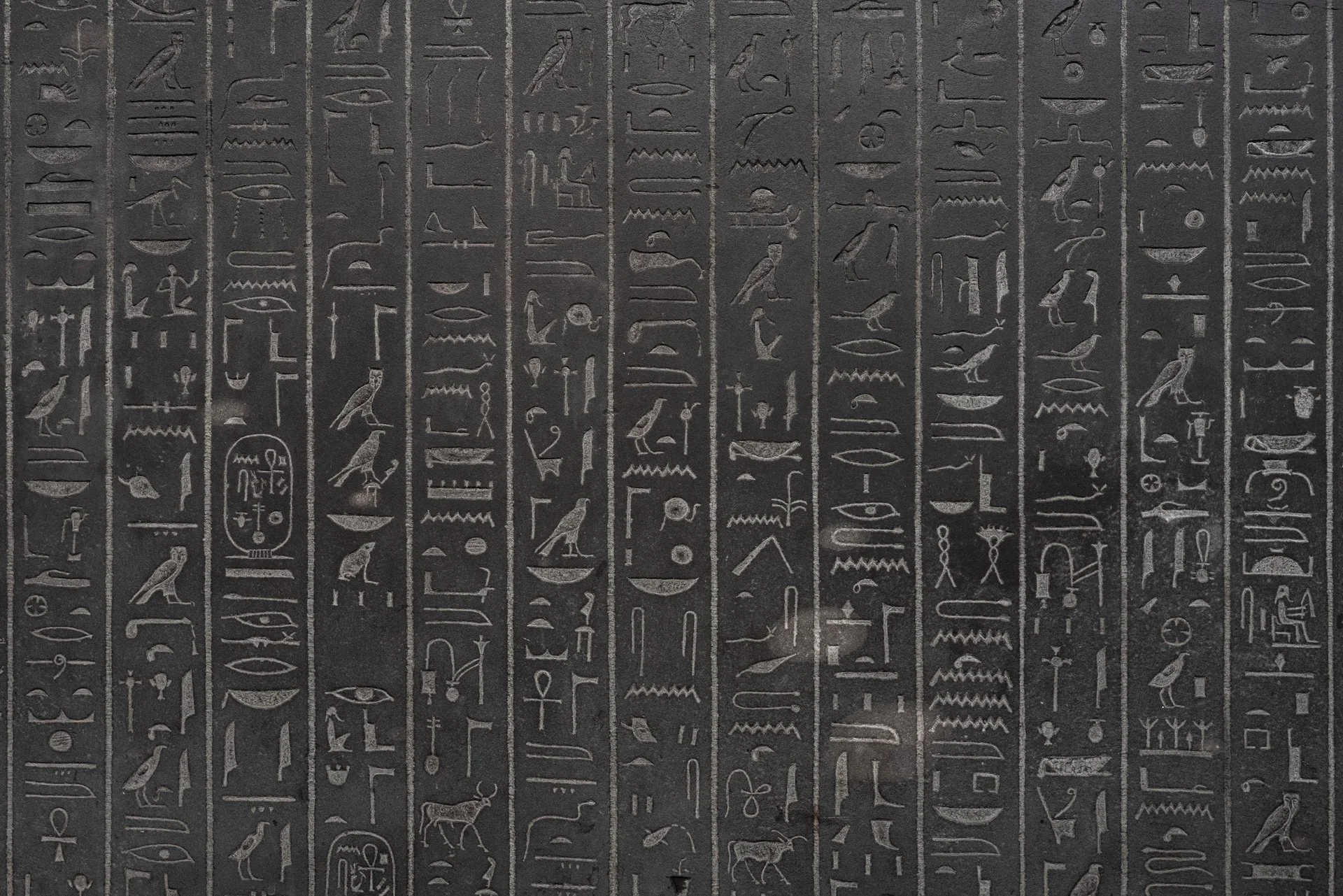
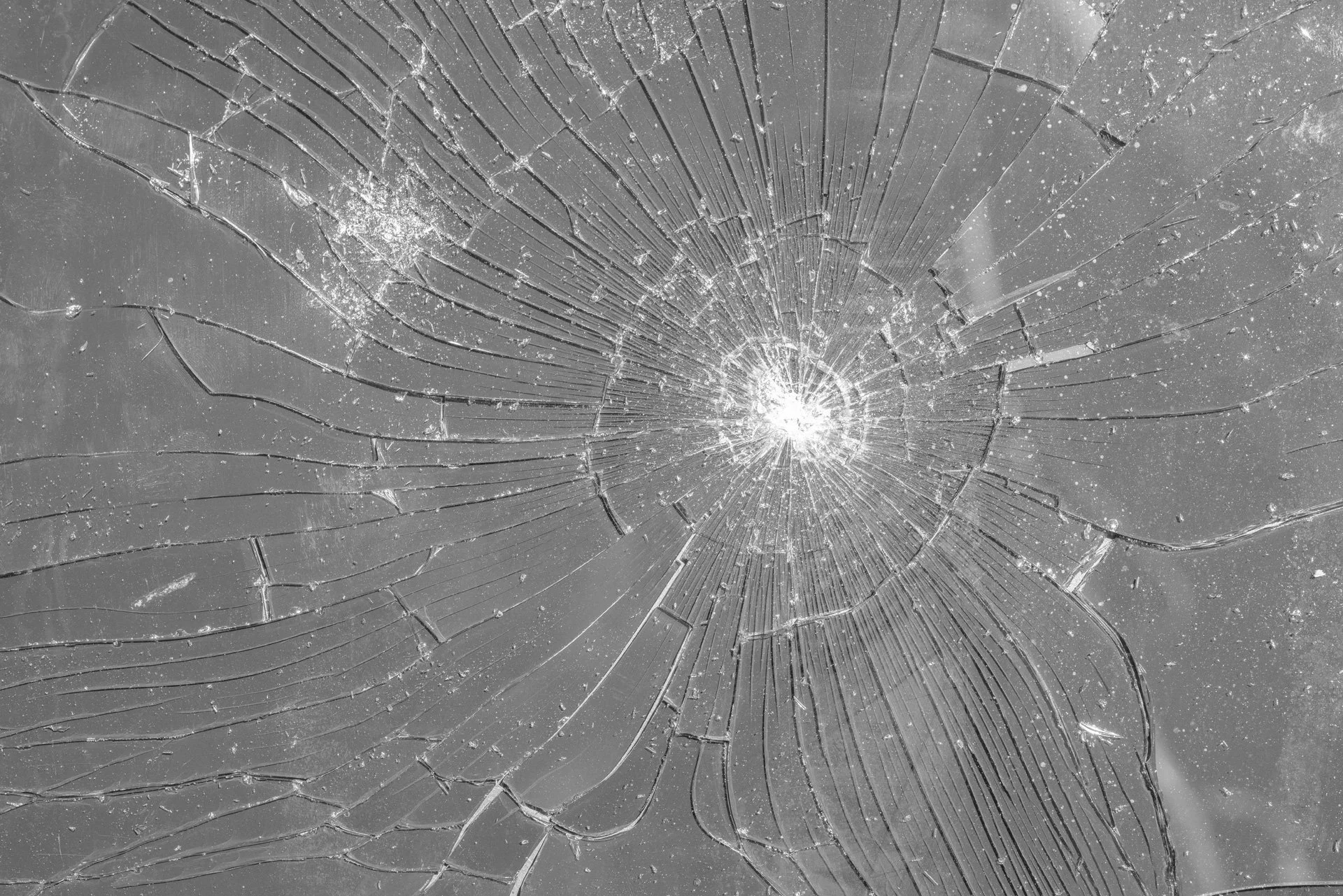
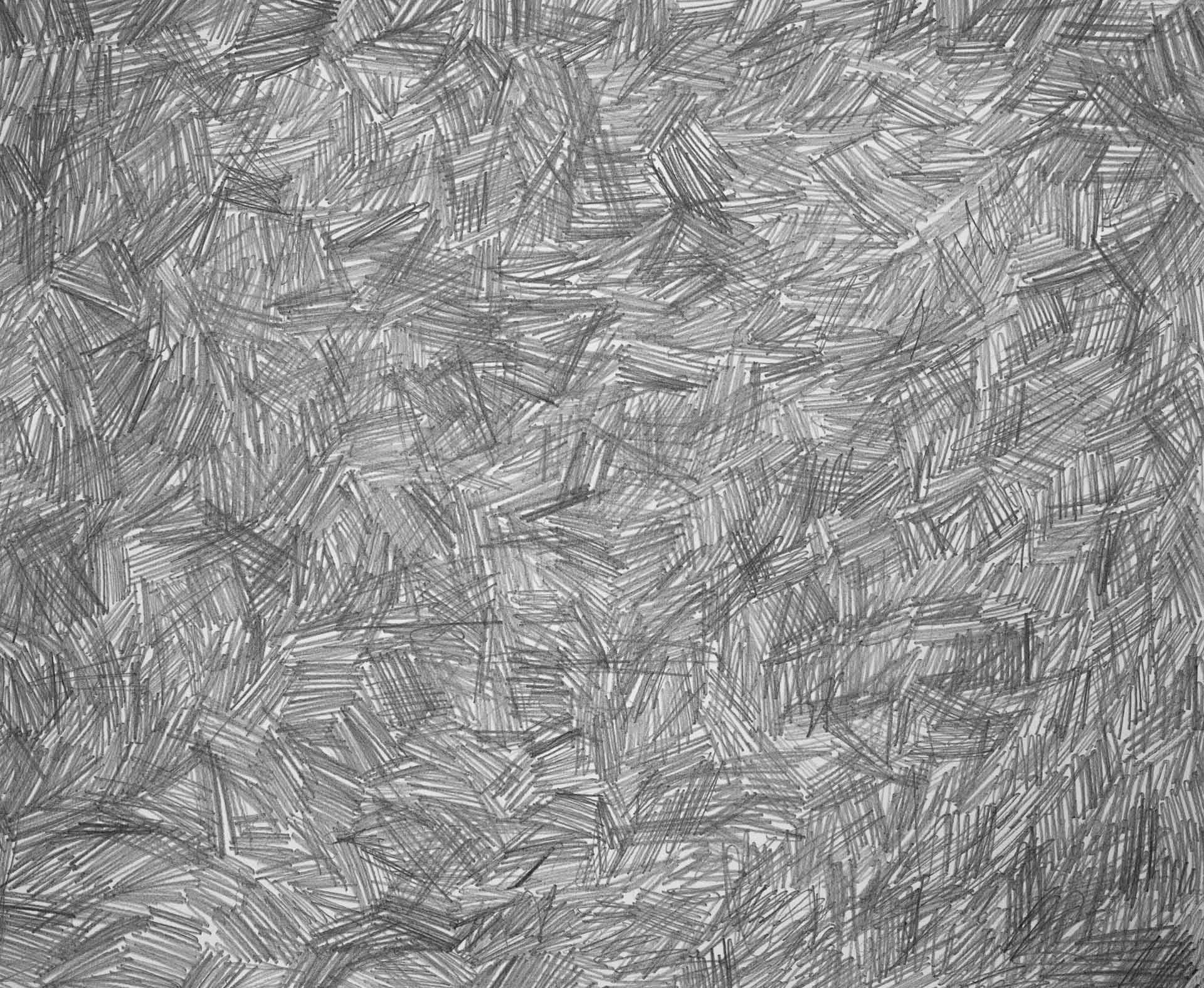
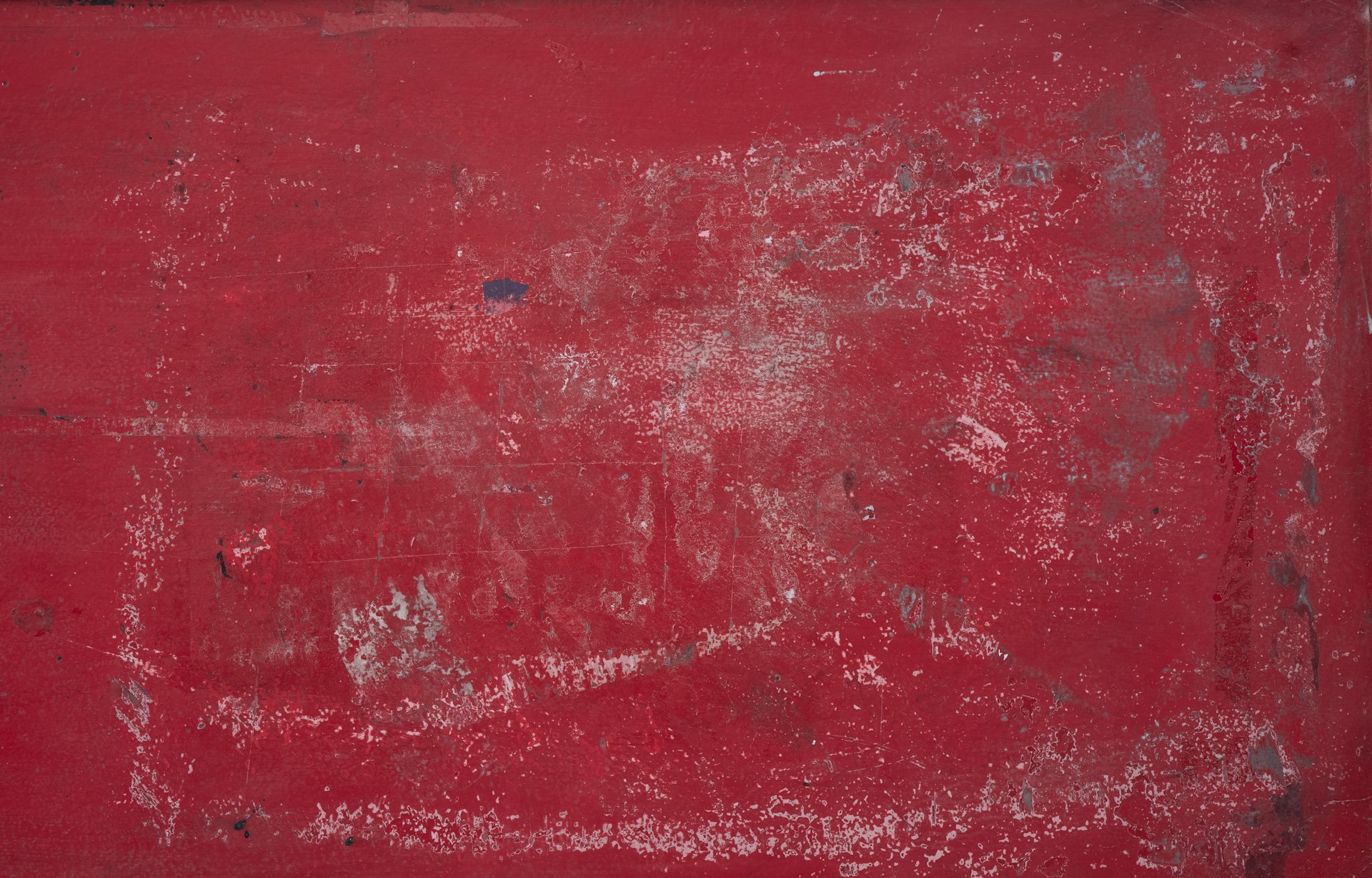
collage art
UNSTUCK / THE CREATIVE CHAOS NAVIGATOR
A Sefirot-Powered Digital Tool for Creative Breakthroughs.
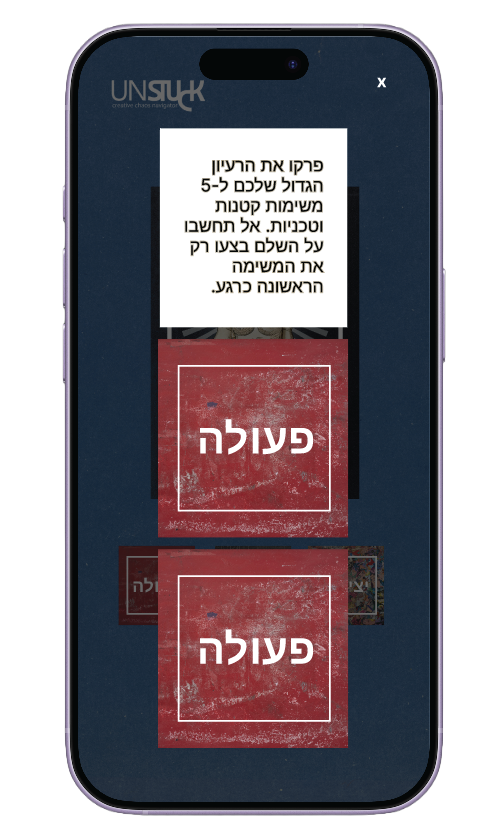
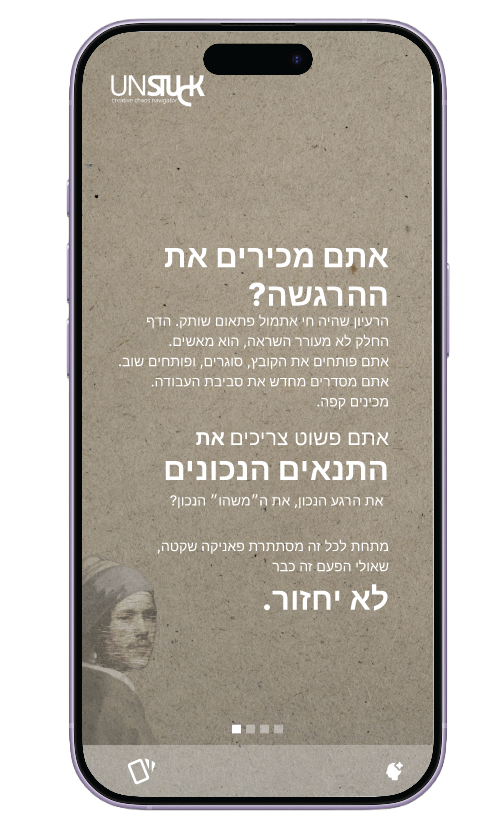
UNSTUCK translates the philosophical Sefirot framework into an actionable digital companion for designers, writers, and artists facing creative resistance, burnout, or paralysis.
HOW THE SYSTEM WORKS
State Diagnosis Flow: An intuitive entry interface where creators pinpoint where they are stuck—whether struggling with the initial spark (Keter/Chokhmah), building structural boundaries (Binah/Gevurah), or pushing through to final execution (Malkhut).
The 90-Card Dynamic Deck: An expansive prompt engine organized into three distinct operational card categories:
Thinking Cards: Deep philosophical inquiries and perspective shifts to unlock conceptual bottlenecks.
Action Cards: Timed, tactical exercises (e.g., set a 10-minute sprint, define 3 rigid project constraints, synthesize the concept into a single sentence).
Wild Cards: Disruptive, unpredictable lateral thinking curveballs designed to break rigid thought patterns.
USER EXPERIENCE & SENSORY UI
Distraction-Free Environment: A quiet, typography-first interface rendered in deep blueprint tones, avoiding visual noise to help users regain mental focus.
Tactile Interaction: Kinetic card-flip animations and tactile swipe gestures that replicate the physical act of drawing an insight card from a physical deck.
Visual Journey Mapping: A minimalist Sefirot progress tracker visualizing the user's movement from abstract chaos to grounded manifestation.
UI/UX SPECIFICATIONS
Role: Product Strategy, UX Architecture, UI Design, Content/Prompt Writing
Design Stack: Figma, Adobe Illustrator, Adobe Photoshop
Deliverables: Design System, Interactive Component Library, Mobile App Prototype
Suggested Visual Layout for this Section:
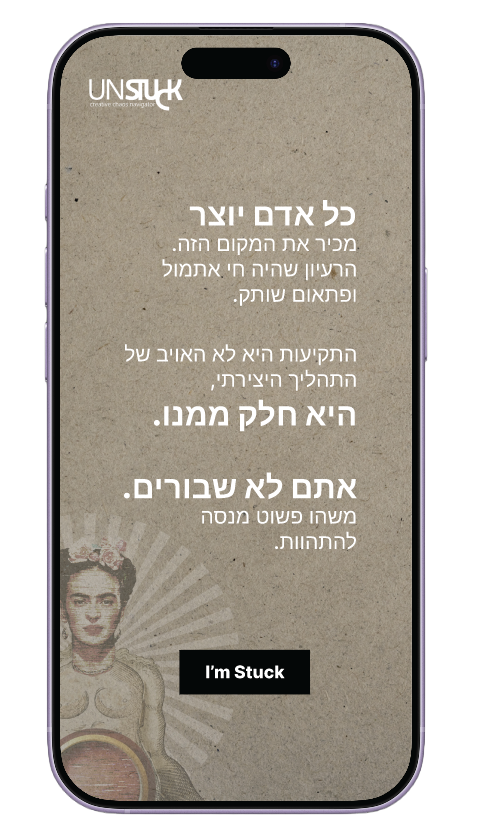
Screen 1: Onboarding / "Where Are You Stuck?" diagnosis selector.
Screen 2: The Card Draw interaction (showing a card flipping in motion).
Screen 3: Active Prompt Screen (displaying a Binah/Gevurah tactical constraint exercise).
Card Specimen Grid: A clean 3-card spread showcasing a Thinking, Action, and Wild card side-by-side.
LOGO CONCEPT & TYPOGRAPHIC TENSION
Visualizing Liberation from the Grid.
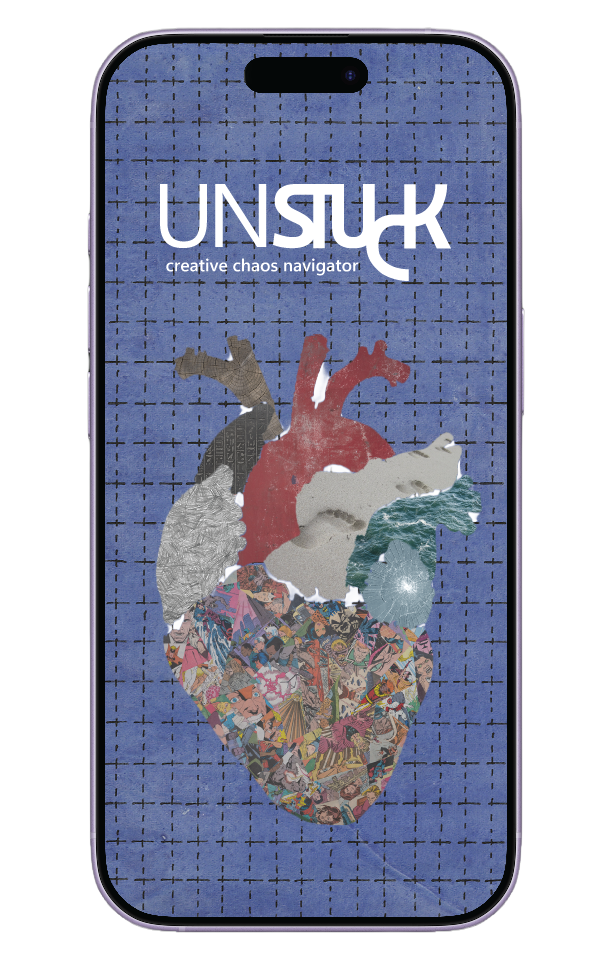
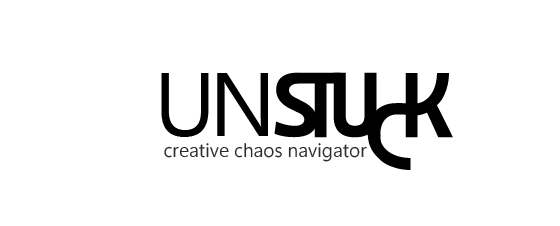
The identity for UNSTUCK: Creative Chaos Navigator embodies the physical sensation of creative blockage and the breakthrough that follows.
Typographic Confinement: The letters U-N-S-T-U-K are tightly tracked, interlocking, and rigid—representing friction, dense mental clutter, and creative paralysis.
The "C" Breakthrough: The letter C (echoing the project’s Hebrew root כ / Kaf / Chaos) disrupts the baseline, dropping down and sliding out from the compressed structure. It is the visual manifestation of becoming "unstuck"—breaking free from rigid constraint into movement and flow.
Tagline Architecture: Set in a clean, understated geometric sans-serif to ground the dynamic tension of the main wordmark and establish clarity.
Unstuck:
Creative Chaos Navigator App